 English
 Chinese
Taiyuan Wusu Zero-carbon Airport Project Launched to Support Green Energy Transition in China's Civil Aviation
source:本站 Number of views:47 time
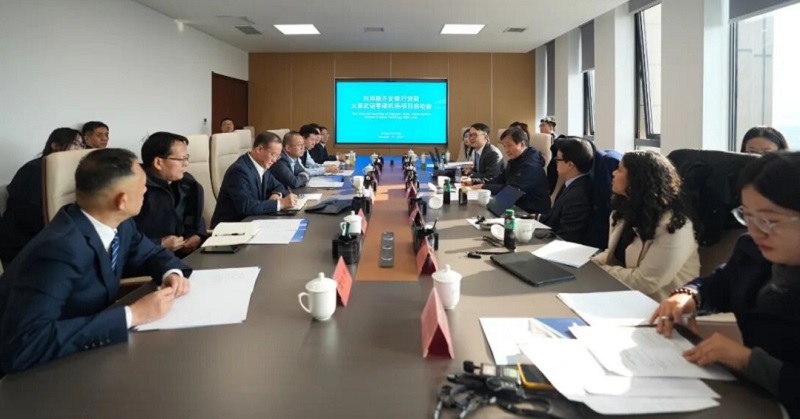
The Taiyuan Wusu Zero-carbon Airport Project, utilizing a loan from the New Development Bank (NDB), has officially commenced implementation following the successful convening of its project launch meeting and a series of stakeholder consultations recently. The Environmental and Energy Development Research Center (EED), trusted by the project's executing and implementing agencies as a whole-process project management consultant, participated in the meetings. EED provided professional expertise on key agenda items to help ensure the project is delivered to high quality and performance standards.
Financed by a USD 300 million loan from the New Development Bank (NDB), the project will construct buildings integrated with photovoltaic, storage, direct-current, and flexible power technologies (PSDF), a zero-carbon energy center, a smart management and control system, and new energy vehicle charging facilities. By utilizing renewable energy and enhancing energy efficiency, the project aims to achieve annual carbon emission reductions that equal or exceed its emissions, resulting in zero-carbon operations. It is expected to contribute to Shanxi Province's green, low-carbon development and serve as a significant pilot for the sustainable development of China's civil aviation sector.
During the meetings, EED's consulting expert team engaged in in-depth discussions with the NDB project appraisal mission, representatives from the Shanxi Provincial Development and Reform Commission, Department of Finance, Shanxi Aviation Industry Group, and other partners. Throughout the project cycle, EED will provide comprehensive support on core aspects including compliant fund utilization, environmental and social benefit management, and the implementation of key technologies. This includes assisting in designing efficient and transparent loan fund management procedures, establishing a lifecycle environmental monitoring and carbon asset management system, and proposing optimized solutions for critical technical components such as photovoltaic consumption, energy storage configuration, and multi-energy synergy. EED will also promote the deep integration of digital and intelligent tools in energy management. This professional support has laid a solid foundation for the project's subsequent optimization.
The Taiyuan Wusu Zero-carbon Airport Project represents a significant step in implementing China's national dual-carbon goals and demonstrates the country's commitment to climate action. It also stands as a prime example of international financial support for green infrastructure in China. Upon completion, the project will not only function as a highly efficient modern transport hub but also emerge as a "Chinese model" showcasing the integration of low-carbon technologies, green finance, and sustainable management. It is poised to offer replicable and scalable practical solutions for the global aviation industry's green transition.