 English
 Chinese
EED Empowers Shandong to Build a New Model for Green and High-Quality Agricultural Development
source:本站 Number of views:27 time
Introduction
The Yellow River Basin Green Farmland and High-Quality Agriculture Development Project, financed by the Asian Development Bank (ADB), is being accelerated across Shandong Province. Focusing on high-standard farmland development, green agricultural transformation, and agricultural value chain upgrading, the three counties of Yanggu, Ningyang, and Yuncheng are advancing in coordination, with a number of farmland infrastructure and agricultural industrialization projects already achieving phased results.
As the project management consulting service provider, Energy and Environmental Development Research Center (EED) leverages its extensive experience in the implementation and management of international financial institution-funded projects. EED provides full-process professional consulting services covering project management, agricultural technical support, environmental and social safeguards, capacity building, and results summarization, thereby supporting the smooth implementation of the project and helping establish a “Shandong model” for green and high-quality agricultural development in the Yellow River Basin.
Recently, the ADB-financed Yellow River Basin Green Farmland and High-Quality Agriculture Development Project in Shandong Province has accelerated implementation in Yanggu County of Liaocheng, Ningyang County of Tai’an, and Yuncheng County of Heze. A series of agricultural industrialization and farmland infrastructure projects have achieved phased progress, advancing green development and food security in tandem, while the project’s overall benefits are gradually emerging.
As an important initiative to implement China’s national strategy for ecological protection and high-quality development in the Yellow River Basin, the project promotes the transformation of agricultural production toward larger-scale, standardized, and greener development through high-standard farmland construction, green agricultural transformation, and agricultural value chain extension.
Yanggu County Strengthens the Foundation of High-Standard Farmland
In Yanggu County, project implementation has demonstrated a positive trend of “simultaneous advancement of farmland infrastructure and industrial projects.”
At present, high-standard farmland construction is progressing steadily. Projects such as rehabilitation of irrigation wells, construction of new pumping stations, and installation of water-saving pipelines are advancing continuously, while the water-efficient irrigation system is gradually improving. To date, more than 95% of irrigation well construction has been completed, over 86% of water-saving pipeline installation has been finished, and the construction of farm roads and drainage ditches is progressing in an orderly manner, providing solid support for stable agricultural production and yield improvement.
At the same time, agricultural industrialization projects are also moving forward steadily. Construction of grain storage projects and cherry greenhouse agriculture projects has made notable progress. Among them, the annual 20,000-ton grain storage project has completed approximately 85% of its construction work, accelerating the establishment of a modern agricultural industrial system. Through the coordinated development of infrastructure and industrial projects, Yanggu County is gradually forming a development pattern integrating “high-standard farmland + modern agricultural industry.
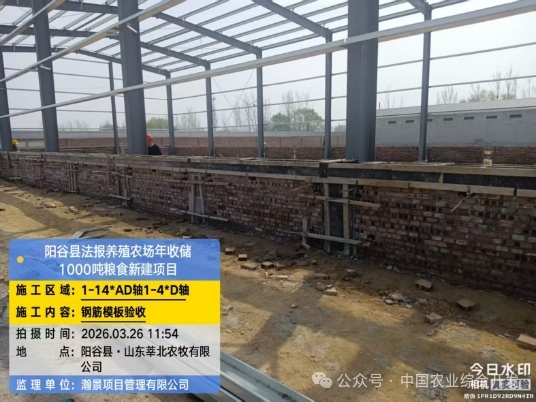
Yanggu County Fabao Breeding Farm — New Grain Storage Project with Annual Capacity of 1,000 Tons
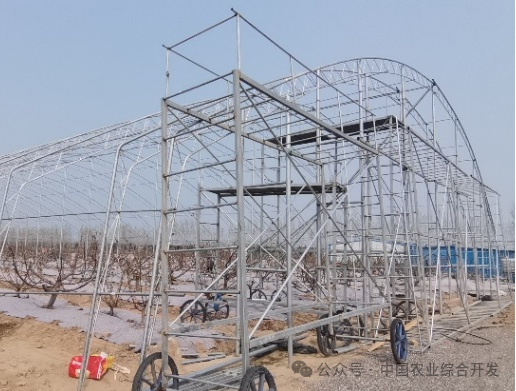
Yanggu County Dabuxiang Rongmin Family Farm — Upgrading Project for a Cherry Greenhouse Base with Annual Output of 32 Tons
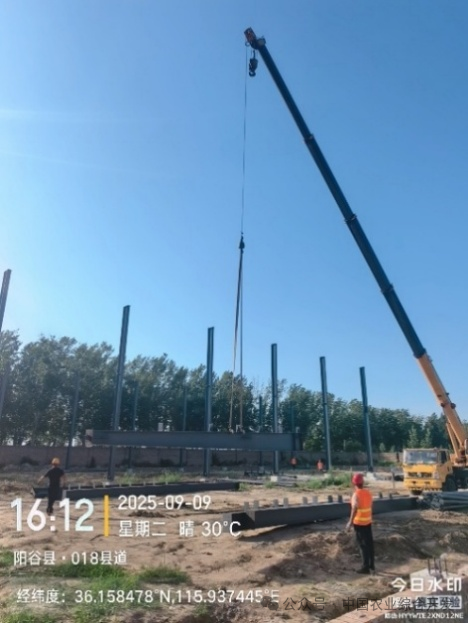
Yanggu County Jinfeng Commune Agricultural Service Co., Ltd. — New Grain Storage Project with Annual Capacity of 20,000 Tons
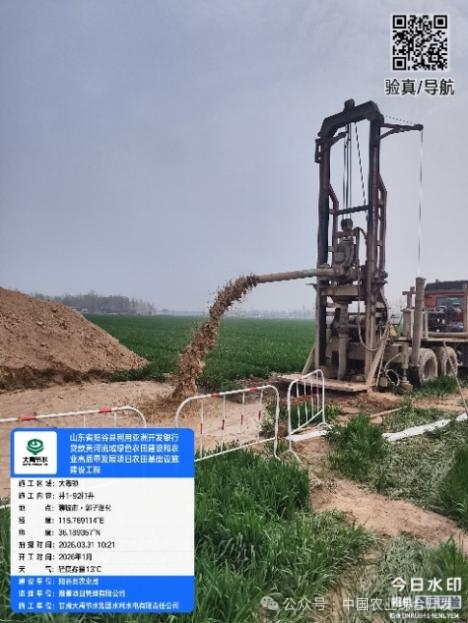
Farmland Irrigation Well Construction
Ningyang County Promotes Upgrading of the Entire Agricultural Value Chain
Ningyang County focuses on post-harvest grain services and agricultural circular utilization, building a modern agricultural service system covering the entire chain of “production – storage – processing – utilization.”
In the post-harvest grain sector, several integrated grain storage and drying projects are being rapidly implemented. Newly constructed grain storage warehouses, drying equipment, and supporting facilities have reduced grain loss rates from the traditional 8%–10% to 2%–3%, significantly enhancing food security capacity. Meanwhile, through staggered sales and quality improvement, these projects are expected to generate annual value-added income amounting to hundreds of thousands of yuan.
In terms of resource recycling, livestock and poultry manure resource utilization projects are progressing steadily. By constructing organic fertilizer production facilities, agricultural waste is transformed into high-efficiency organic fertilizer, realizing the conversion of “waste into resources.” The projects are expected to increase crop yields by approximately 50 kilograms per mu while effectively improving the quality and competitiveness of agricultural products.
In addition, the integrated straw baling and grain drying project has already been put into operation, serving more than 3,000 farming households and covering over 10,000 mu of farmland. The project provides integrated grain drying, storage, and sales services, promoting the transition of agricultural production toward green and low-carbon development.
The implementation of these projects has not only extended the agricultural value chain but also significantly promoted employment and farmers’ income growth, forming a “Ningyang model” for high-quality agricultural development.
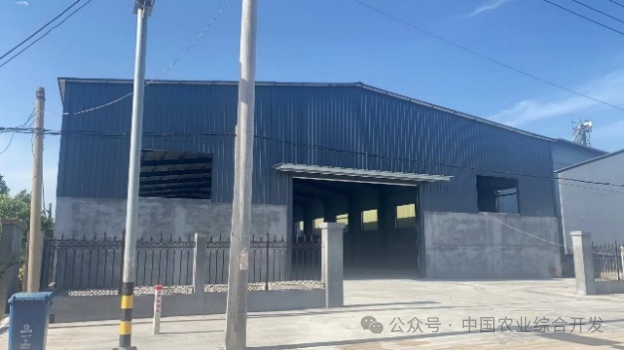
Ningyang County Fengwo Grain Planting Cooperative — 5,000-Ton Integrated Grain Storage Project
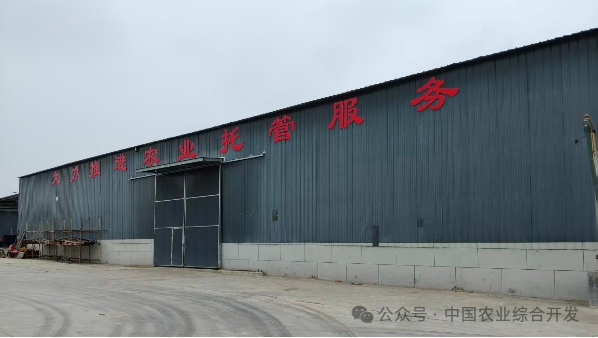
Ningyang County Jinfeng Agricultural Machinery Service Cooperative — 5,000-Ton Integrated Grain Drying and Storage Project
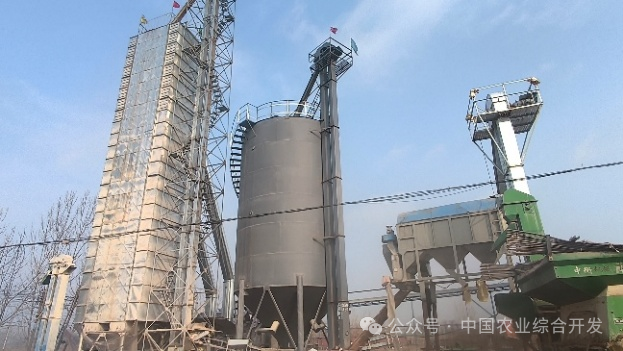
Ningyang County Kewei Xunsheng Agricultural Machinery Service Cooperative — Integrated Grain Harvesting and Straw Baling Project Covering 12,000 Mu
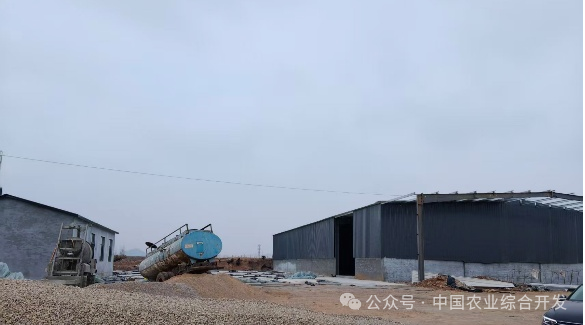
Ningyang County Wenfeng Crop Planting Cooperative — Livestock and Poultry Waste Treatment Project with Annual Capacity of 5,000 Tons
Yuncheng County Accelerates Development of Grain Storage Systems
Yuncheng County has prioritized the development of grain storage and drying capacity to address shortcomings in post-harvest grain services. At present, the integrated grain storage and drying project with a capacity of 12,000 tons has completed the construction of grain warehouses, drying yards, and large-scale weighbridge equipment. Another 4,000-ton project has largely completed its main structure, while supporting facilities are progressing steadily. Upon completion, these projects will significantly enhance regional grain storage and processing capacity, improve grain circulation efficiency, reduce grain losses, and provide strong support for food security.
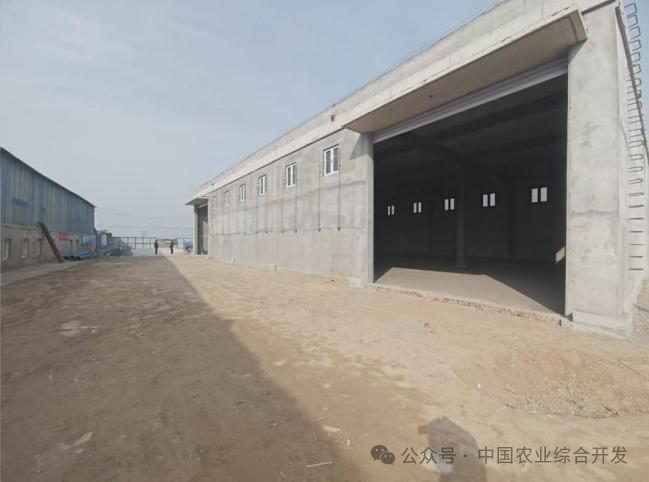
Yuncheng County Heping Shengshi Grain Yuncheng County Yuezhong Guannong
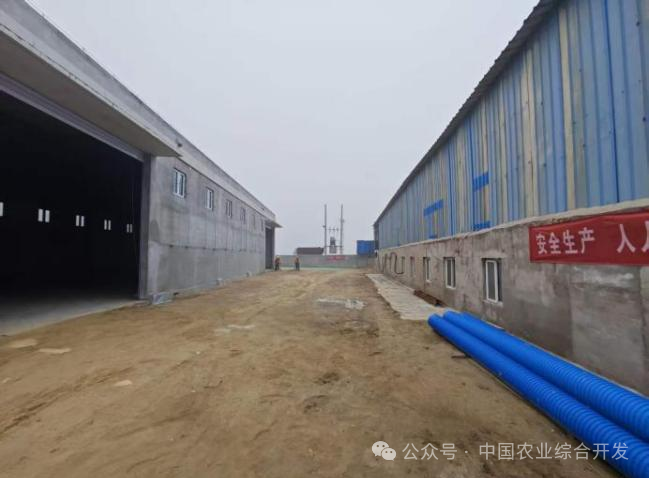
Family Farm — 4,000-Ton Integrated Grain Storage and Drying Project
Comprehensive Benefits Emerging — Advancing Green Development and Farmers’ Income Growth Simultaneously
The provincial project management office and project implementation consultants from EED regularly visit project counties to provide on-site guidance and technical support. County-level project offices work closely with bidding agencies and design institutes to jointly advance implementation. Meanwhile, provincial fiscal funds have strengthened financial support, ensuring the smooth and continuous advancement of the project, with comprehensive benefits becoming increasingly evident. Economic benefits continue to improve: grain storage, drying, and processing services generate stable revenues, with some projects expected to produce annual returns amounting to hundreds of thousands of yuan. Social benefits continue to grow: the projects create rural employment opportunities and promote stable income growth for farmers. Ecological benefits are gradually being realized: measures such as water-saving irrigation, substitution of organic fertilizers, and straw resource utilization effectively reduce agricultural non-point source pollution. Through the coordinated advancement of “infrastructure construction + industrial development + green transformation,” agricultural production conditions in the project areas have improved significantly, while the quality and efficiency of agricultural development continue to rise.
Looking Ahead — Building a Demonstration Zone for High-Quality Agricultural Development in the Yellow River Basin
Moving forward, the project will continue promoting equipment installation, project commissioning, and the establishment of operation and maintenance mechanisms, accelerating the formation of replicable and scalable experience models. With the full completion and operation of the project, Shandong Province is expected to take the lead in establishing a number of demonstration models integrating high-standard farmland construction, agricultural industrialization development, and ecological protection within the Yellow River Basin, thereby providing strong support for high-quality agricultural development nationwide.
Source: ADB Project Management Office of the Shandong Provincial Department of Agriculture and Rural Affairs; Energy and Environment Developmental Research Center (EED)
Authors: Liu Ying, He Naiye